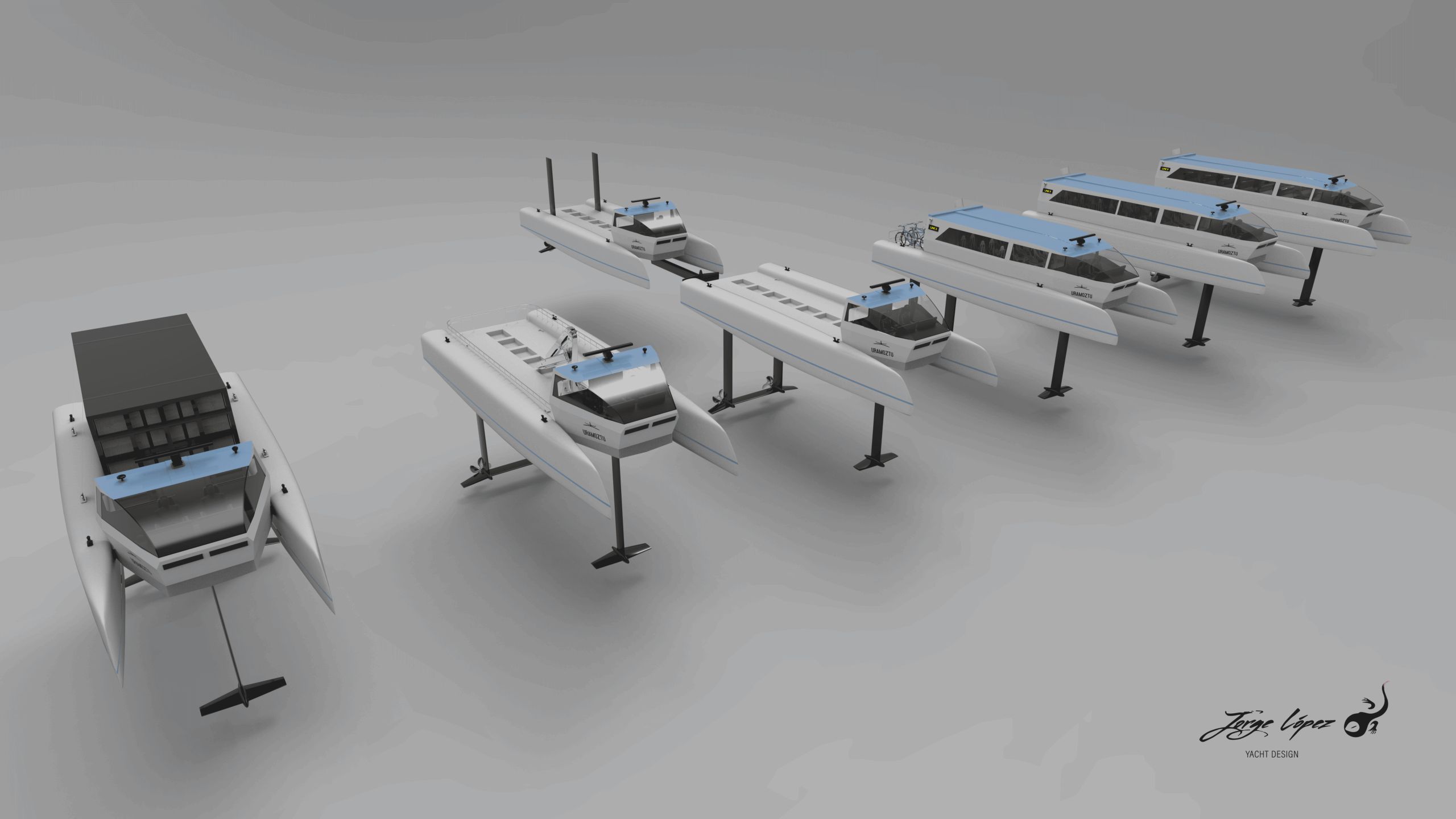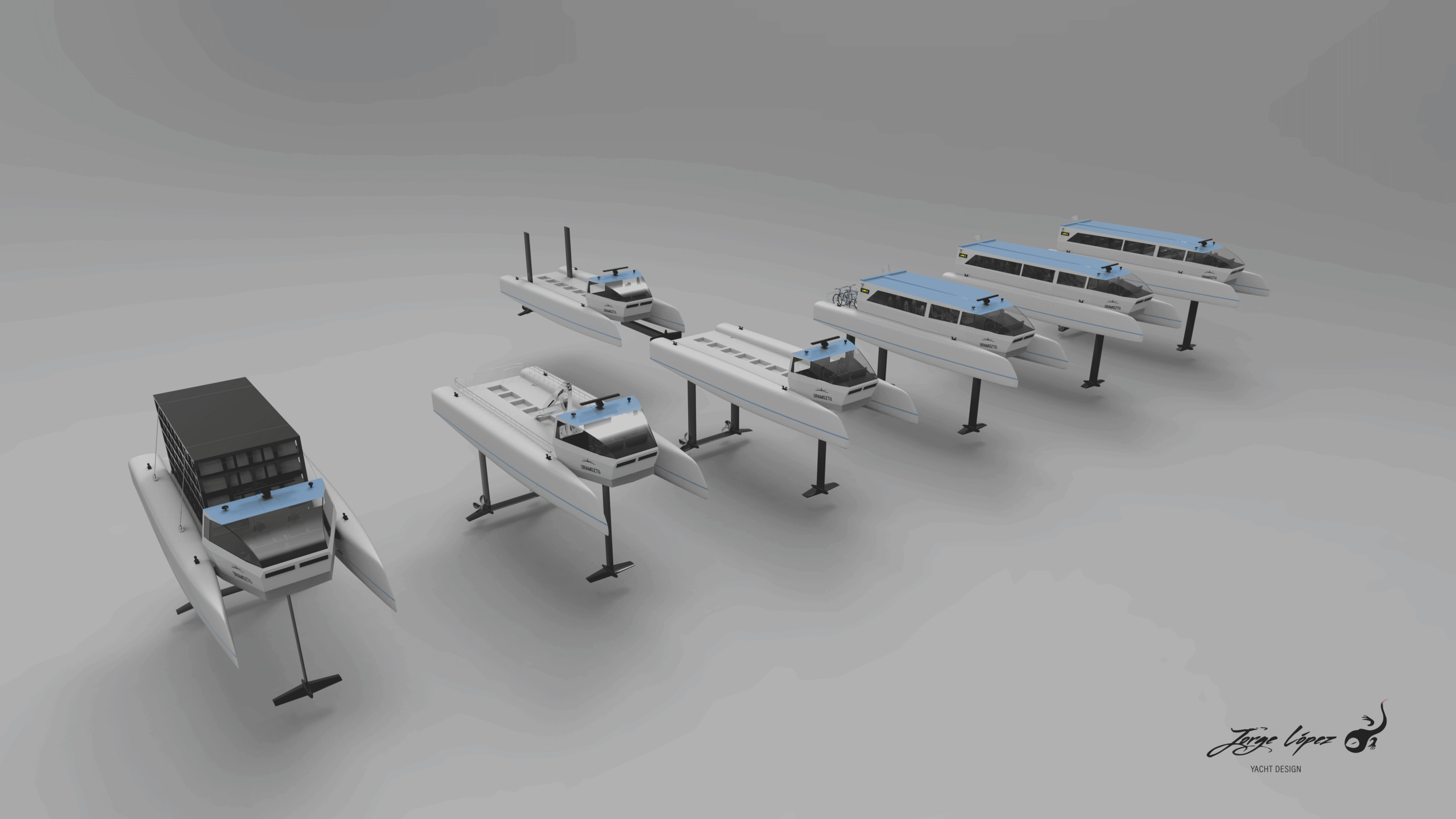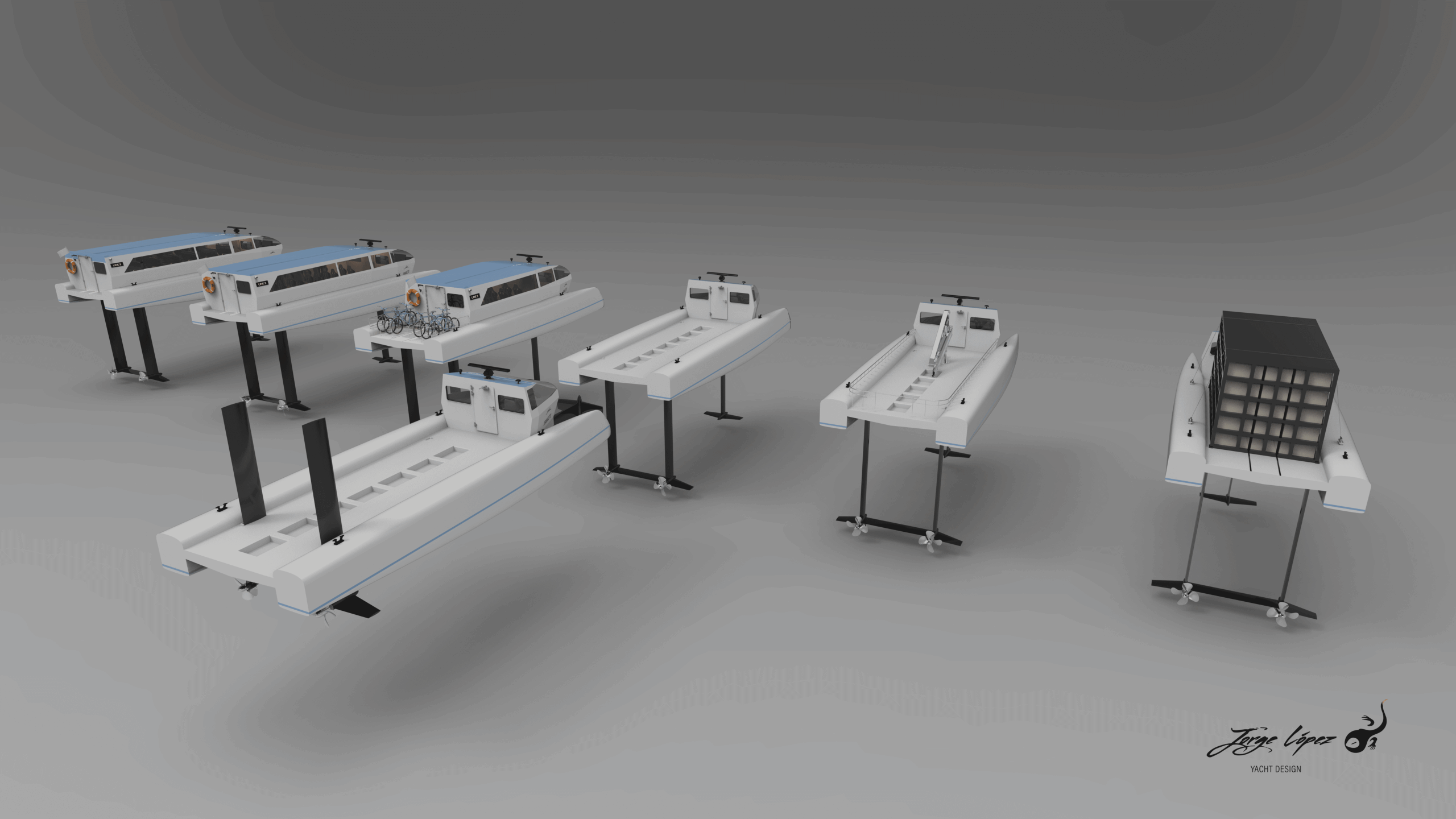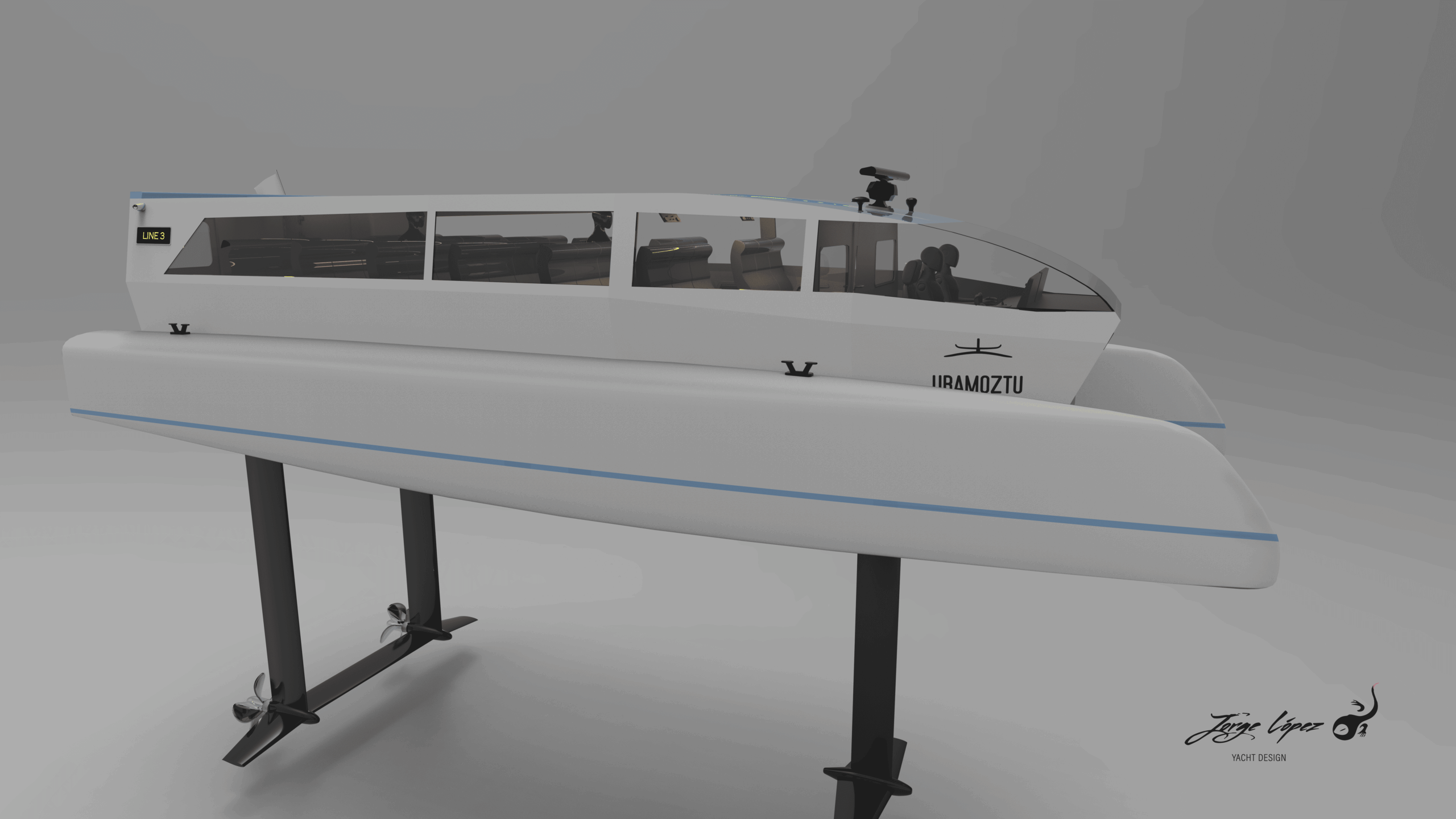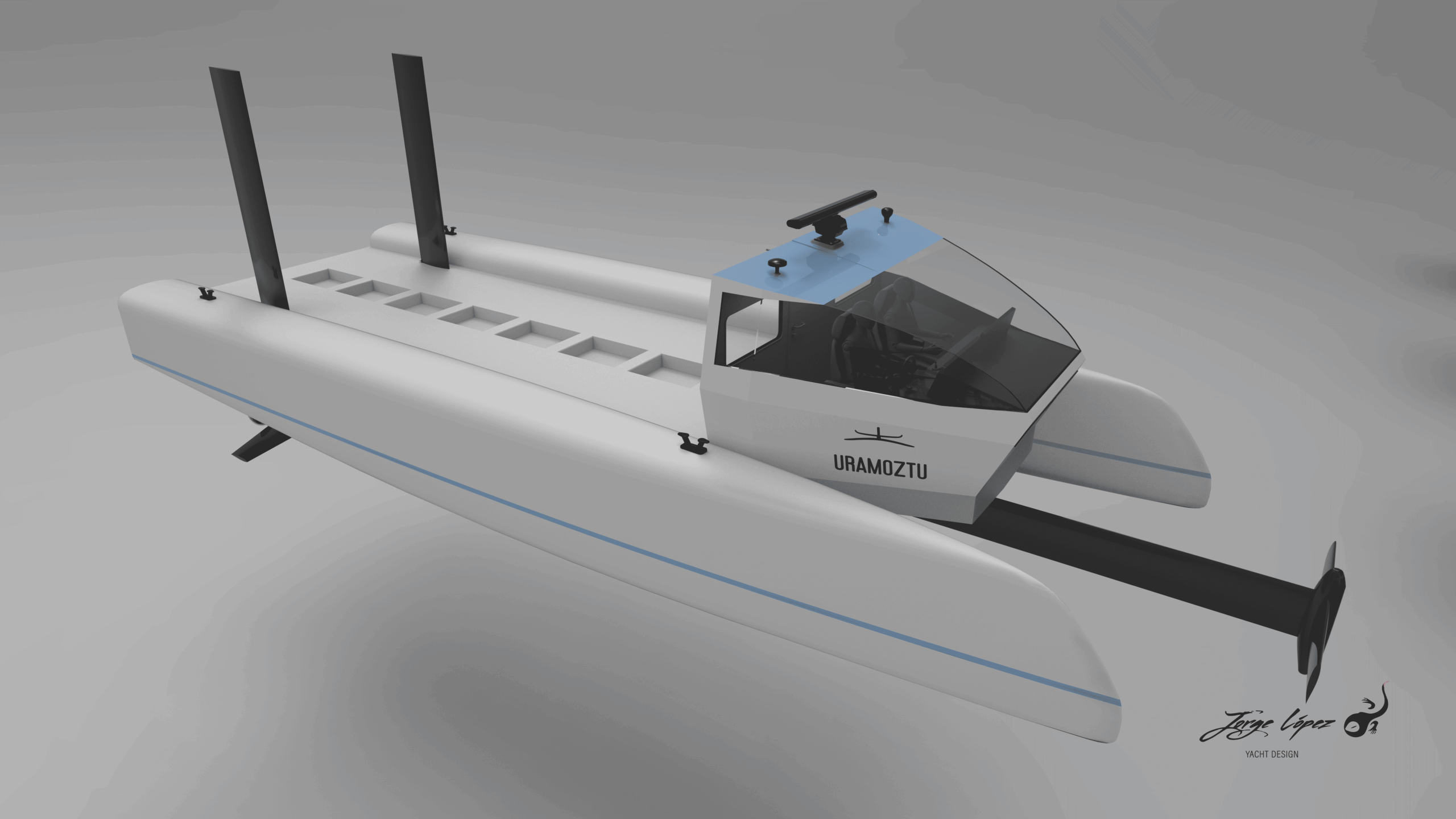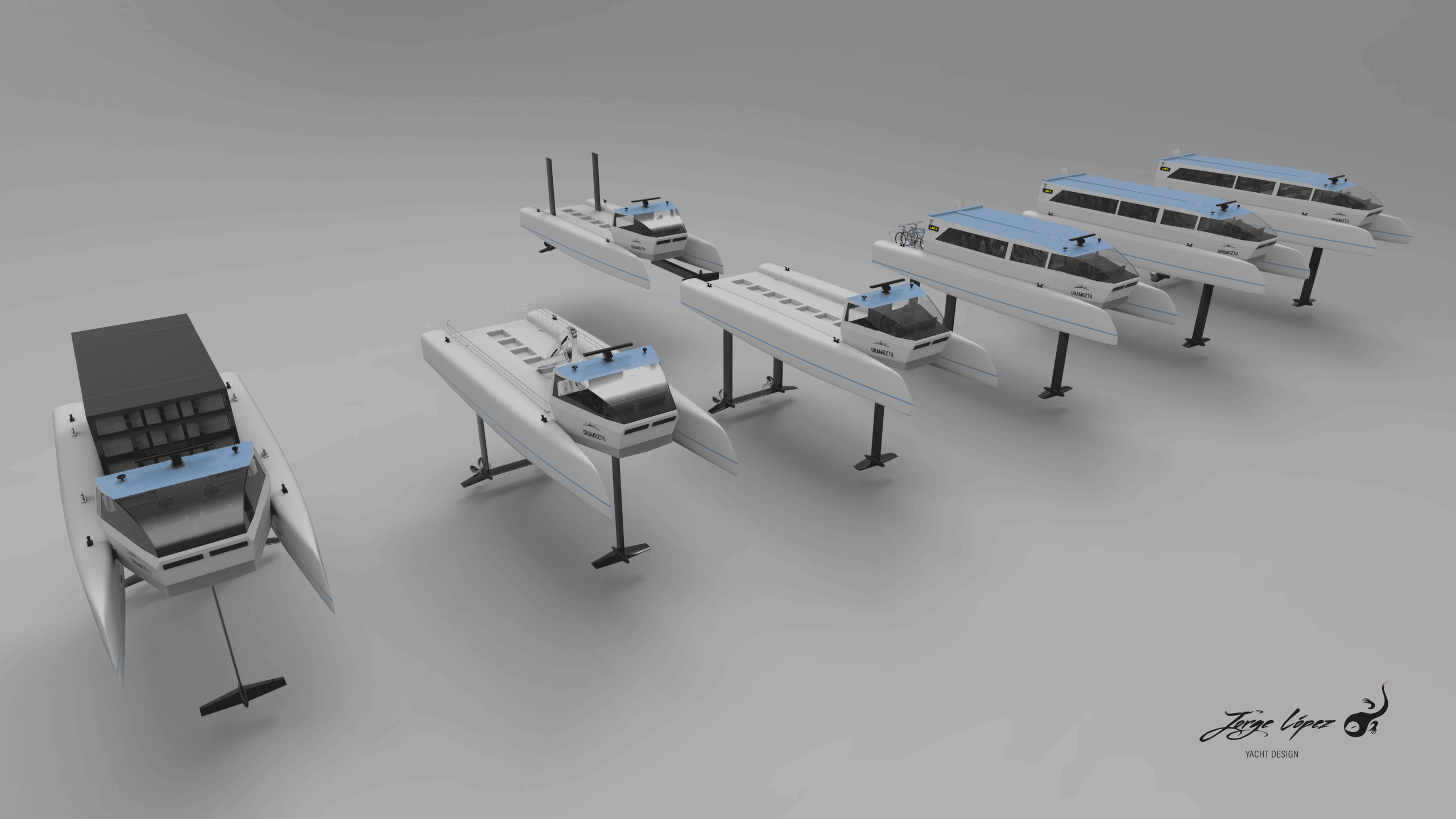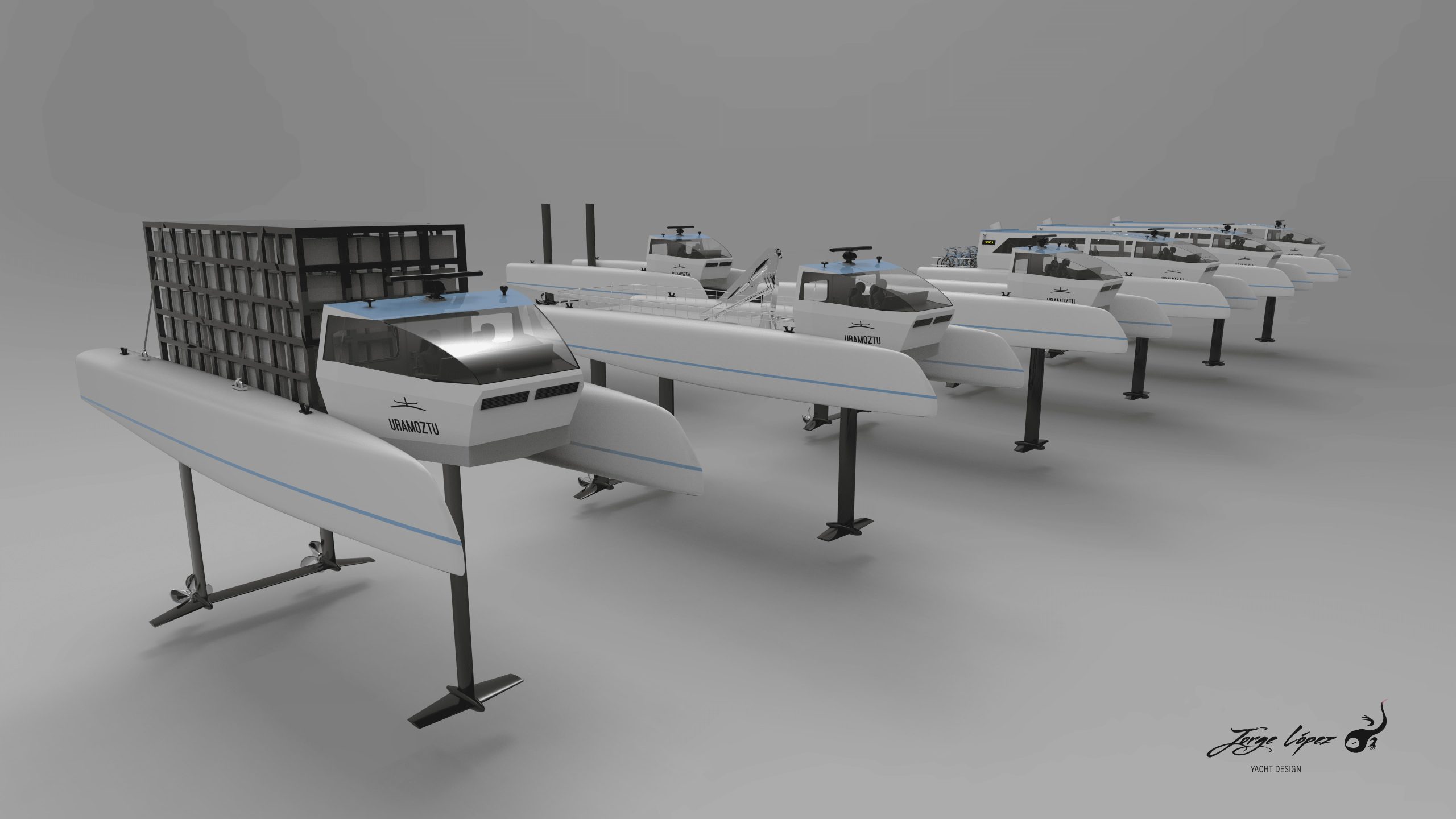
The Hamabi is an innovative vessel developed by the company Foilchemy, specializing in the custom design of hydrofoils and prototypes for naval engineering and maritime transport. This vessel stands out for its modular design and advanced hydrofoil technology, which enable it to offer efficient and sustainable navigation.
The most notable feature of the Hamabi is its structural versatility. The base configuration consists of a fixed cabin for the pilots, while the rest of the deck is an adaptable space that can be modified according to the specific needs of each operation. Thanks to this design, the Hamabi can be configured for light cargo transport, optimizing the transfer of goods in coastal or river areas with great efficiency. It can also be adapted as a ferry for passenger transport, with a capacity of up to 32 people, offering an effective solution for short routes and public maritime transport services. In its most exclusive version, the Hamabi becomes a high-end vessel for up to 12 passengers, providing a premium experience with greater comfort and privacy, ideal for tourism or executive services.
The integration of hydrofoil technology is another standout feature of the Hamabi. These submerged wings lift the hull above the water’s surface during navigation, drastically reducing forward resistance. This feature allows the Hamabi to reach cruising speeds of over 30 knots, improving energy efficiency and providing a smoother and more stable ride.
The combination of its modular design and hydrofoil technology positions the Hamabi as an advanced solution in the maritime transport field. Its ability to adapt to various operational needs, coupled with its focus on sustainability and performance, makes it a versatile and efficient option for different sectors of navigation.


Guide
Where would you like to go?
I am a guide on this site, not Jorge and not an engineer. Anything technical, he answers himself.
Four things, all of them about how a vessel behaves in water:
Jorge reads every enquiry himself. You will get a much more useful first reply if you tell him:
There is no price list, and any figure I gave you here would be wrong.
It depends on the vessel, on how much geometry already exists and on how many conditions have to be simulated — a single resistance run and a full seakeeping study are not the same job.
What Jorge can do quickly is tell you whether your case is a two-week job or a two-month one. Send him the outline and he will come back with scope and a figure.
Ask for a quoteDel Fondo del Océano al Borde del Espacio — the physics that forces vehicles into the shape they have.
A vertical journey from the ocean floor to the edge of space: submarines, container ships, hydrofoils, aircraft, rockets. Written in Spanish, still being written.
Leave your email on the book page and you will hear once, the day it goes on sale.
Go to the bookBased in Málaga, Spain. Works in Spanish and English.
Cookies