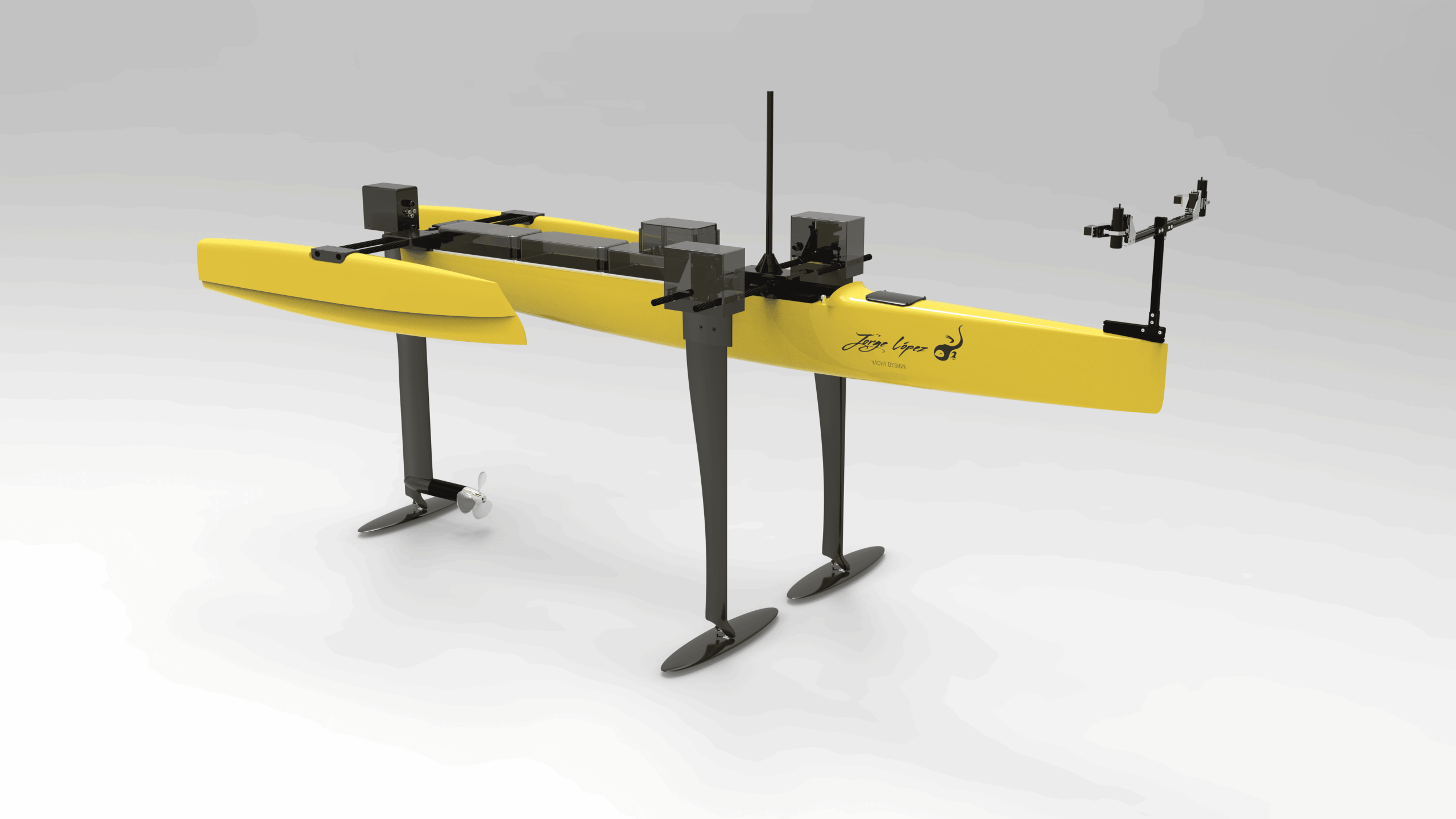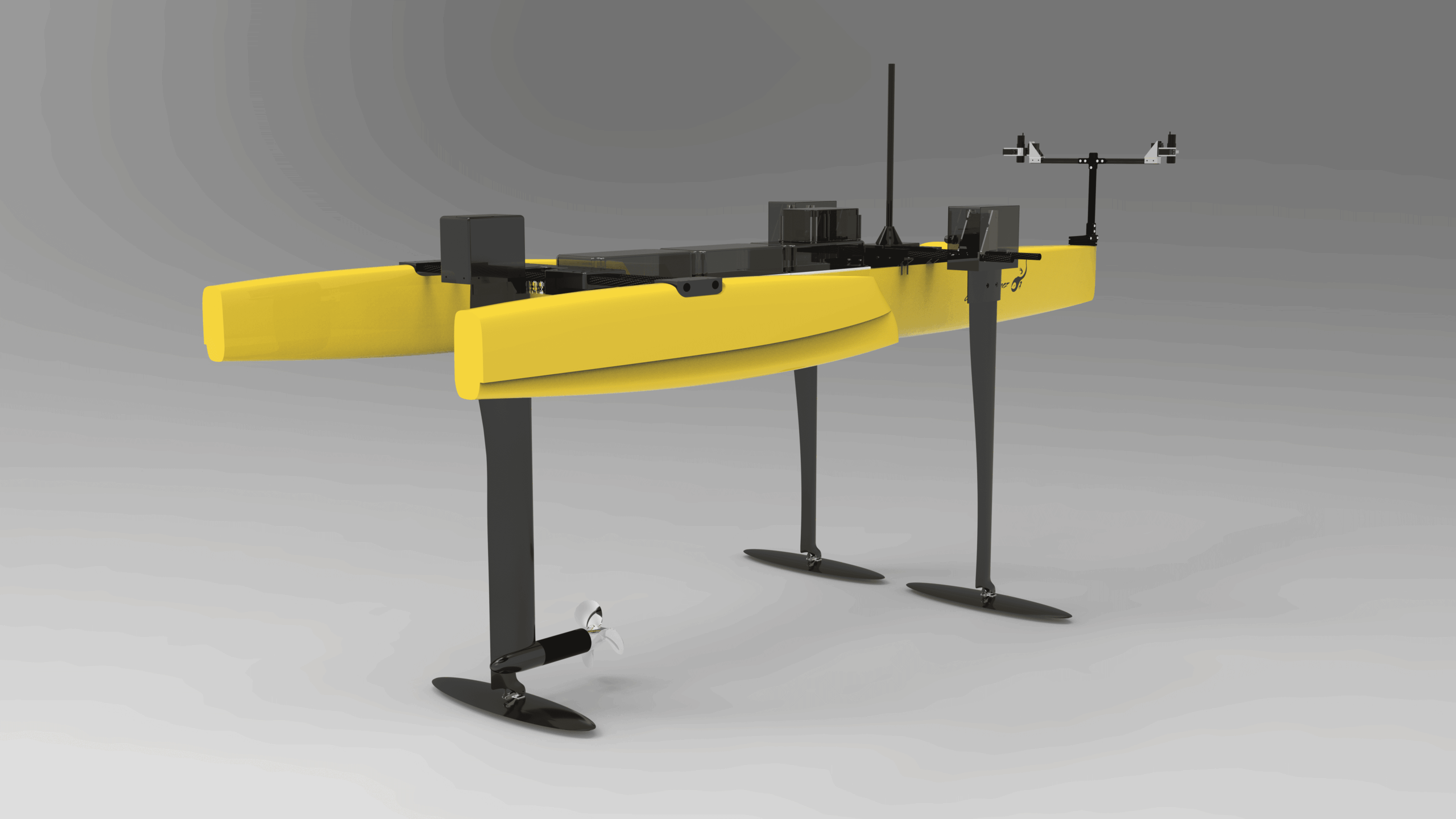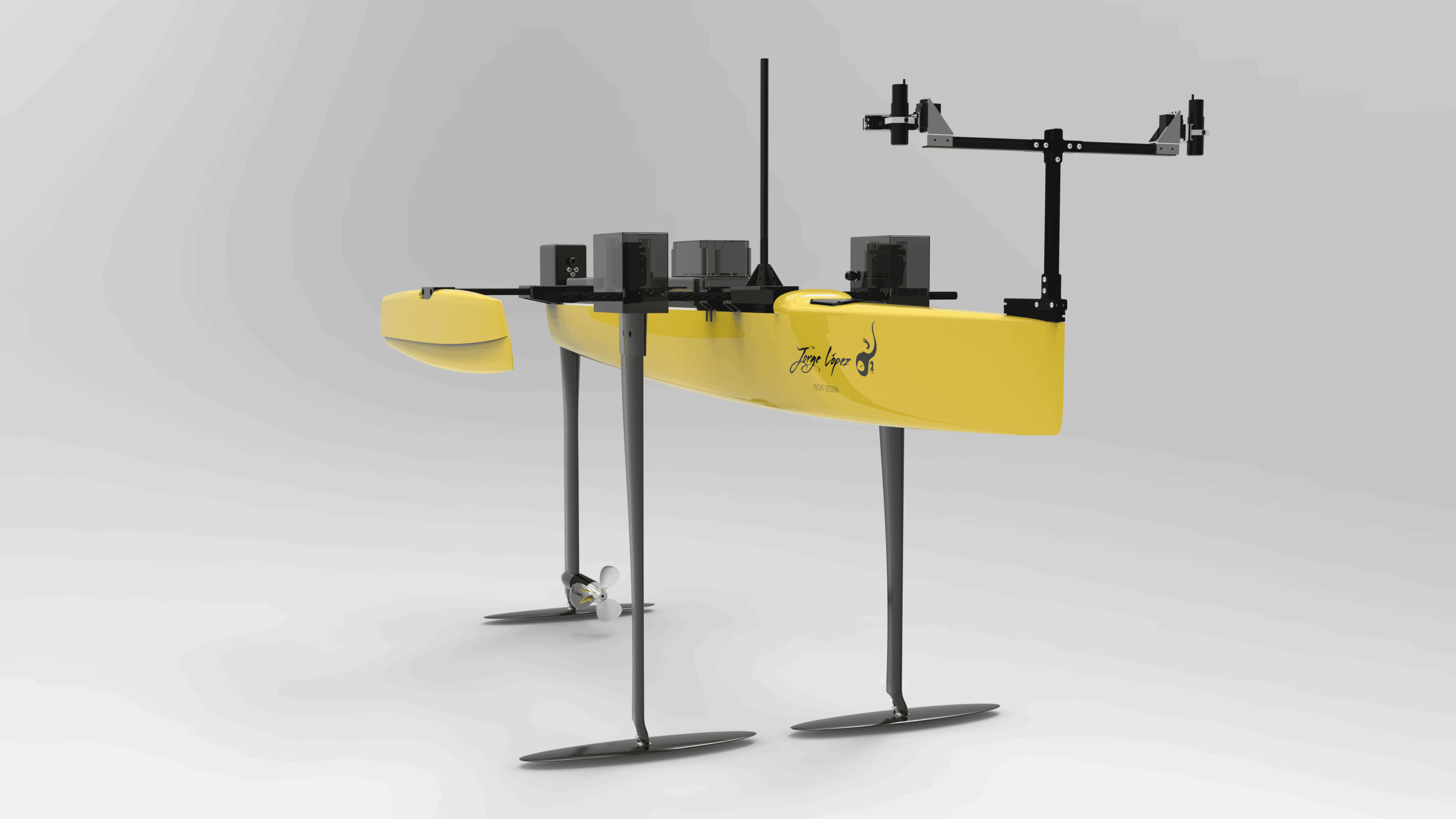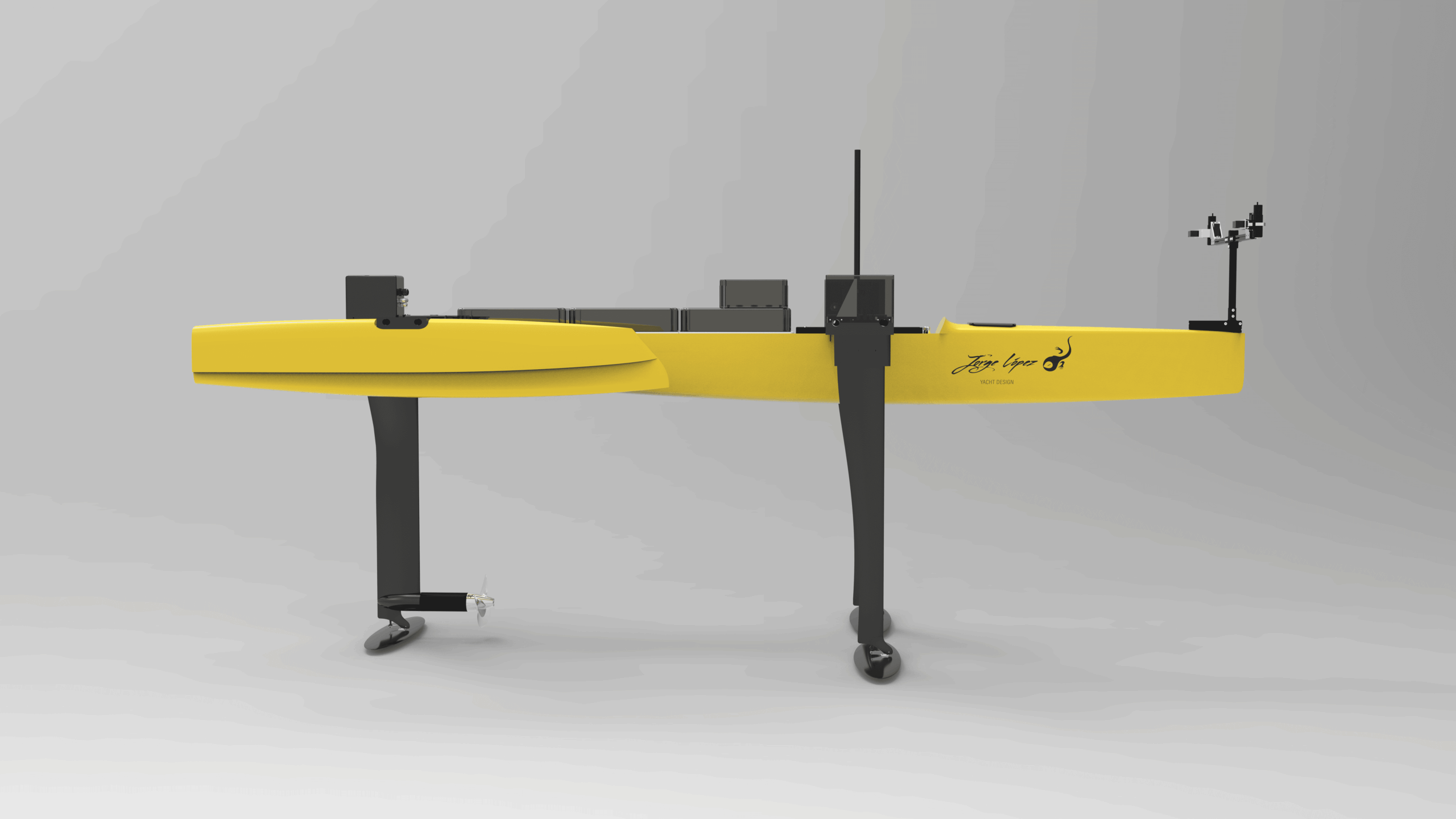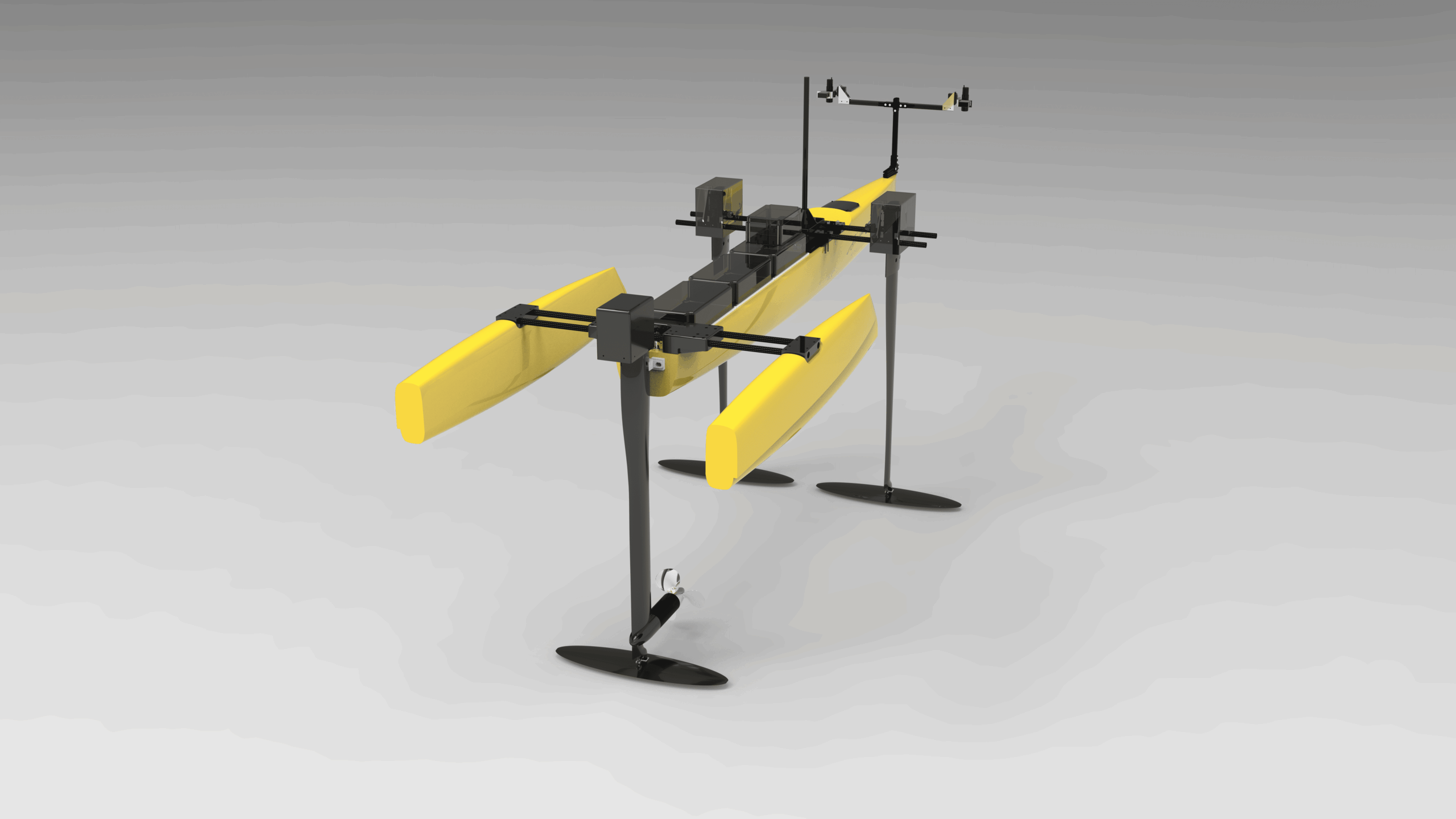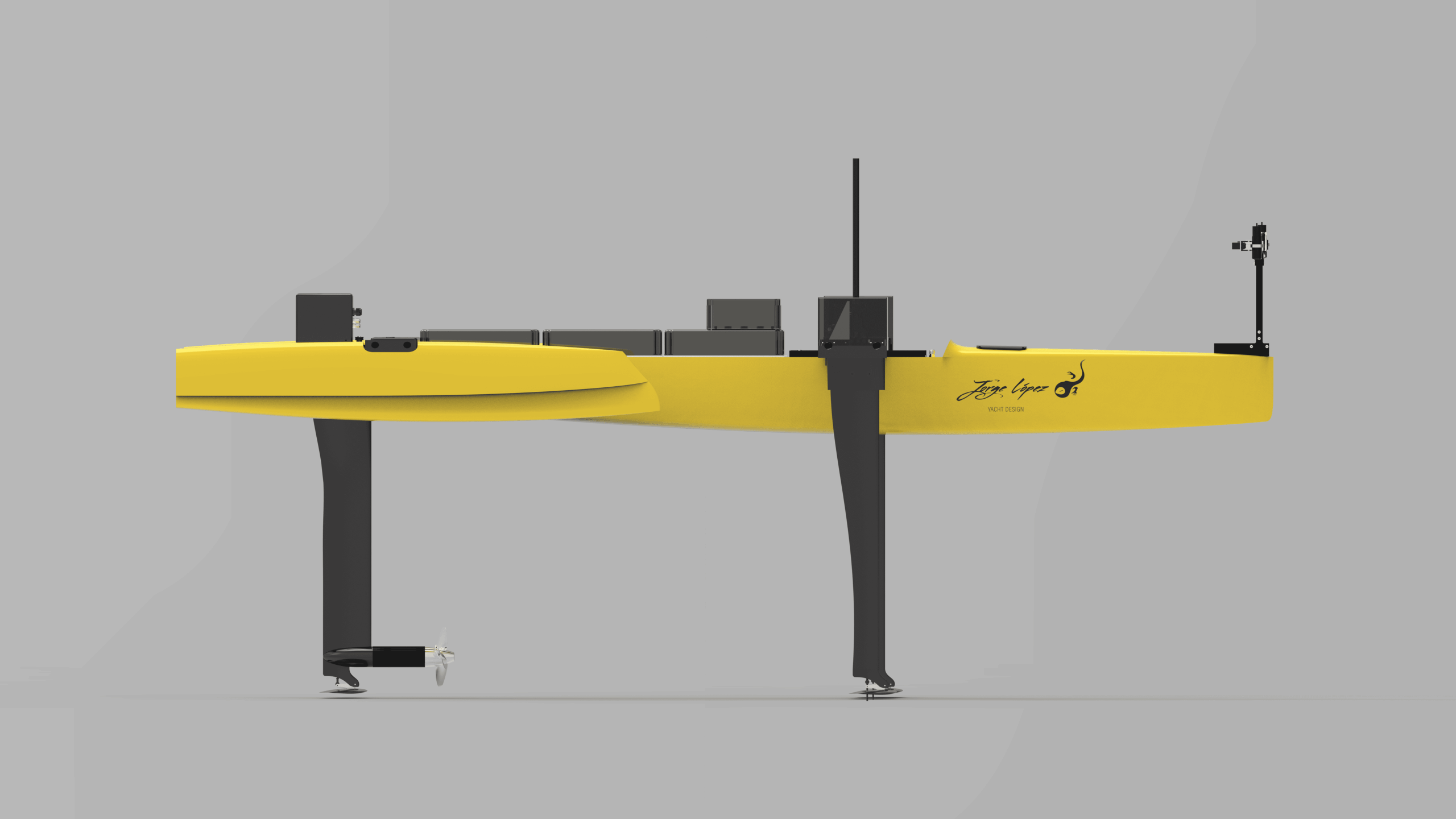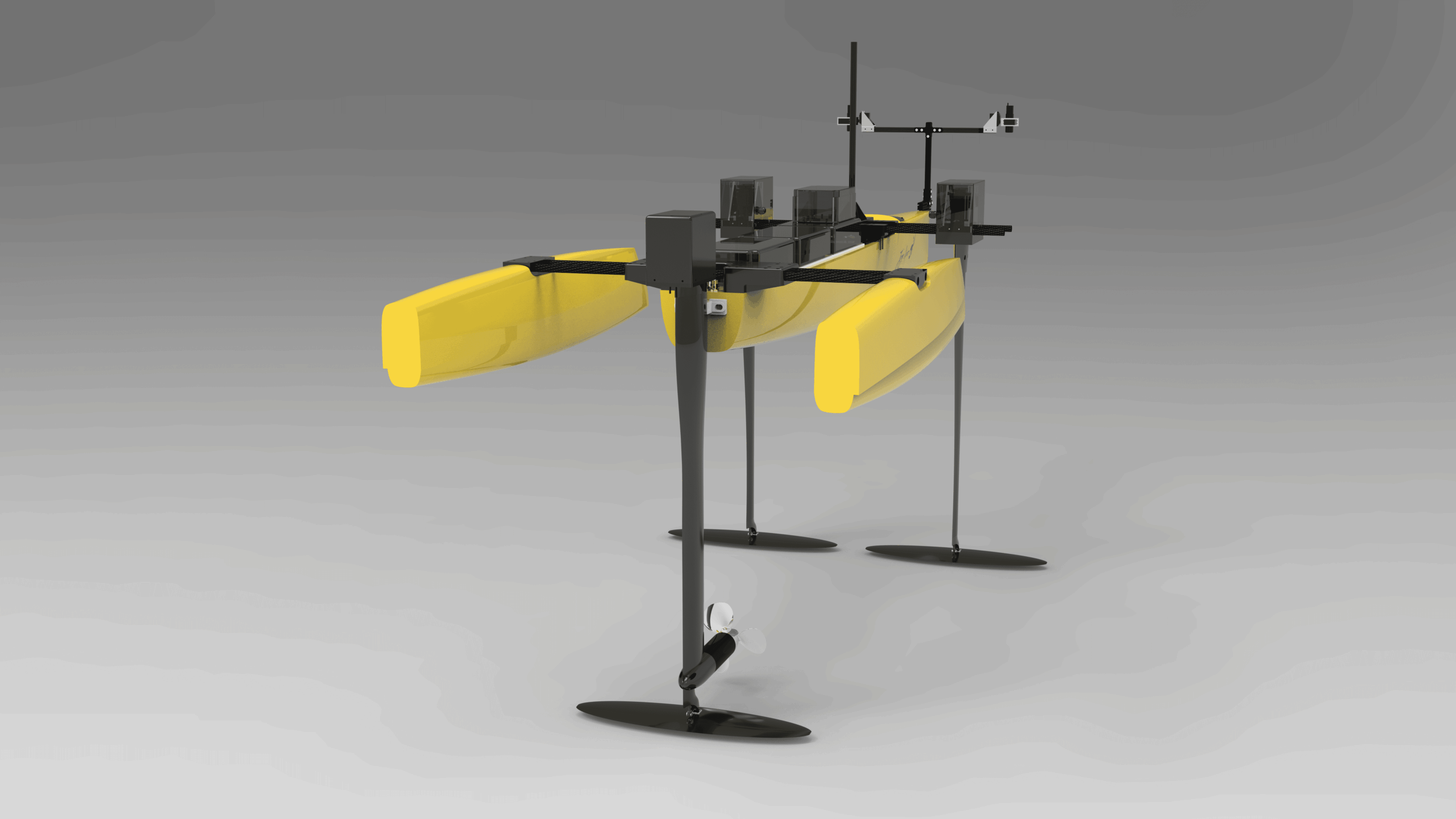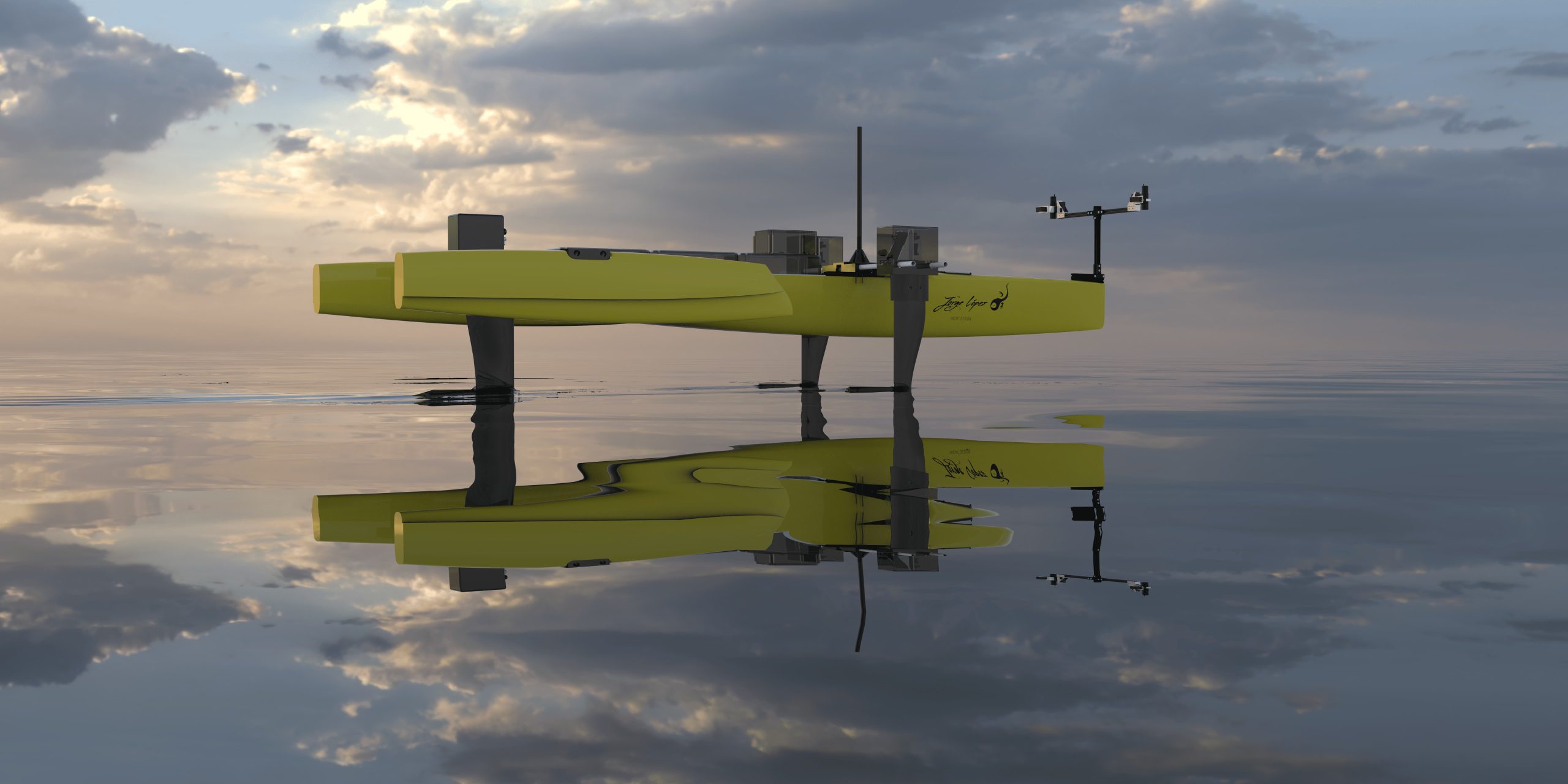
Green Foiling Spain is an innovative project developed by students from the Polytechnic University of Madrid (UPM), aimed at revolutionizing sustainable navigation through the creation of a pioneering vessel in Spain. This multidisciplinary team, composed of 36 students from various UPM schools, has designed and built a vessel that combines hydrofoil (foils) technology with a 100% clean propulsion system, using a hydrogen fuel cell and batteries.
The project aims to participate in the Monaco Energy Boat Challenge, an international competition that promotes innovation in sustainable maritime mobility. The vessel has a length of 7.4 meters and a beam of 1.6 meters, dimensions that have been optimized to enhance its performance and efficiency in the water.
One of the most notable features of Green Foiling Spain is the implementation of a foil system with automatic flight control, which allows the vessel to rise above the water, reducing resistance and increasing energy efficiency. Additionally, the combination of a hydrogen fuel cell with batteries ensures completely clean propulsion, aligning with the sustainability and emissions reduction goals in the maritime sector.
The project also has a strong educational and training component, as many of the team members are developing their Bachelor’s and Master’s Theses related to the vessel’s development. Moreover, Green Foiling Spain serves as a testing platform for doctoral research, fostering collaboration between different disciplines and promoting innovation in the field of naval and ocean engineering.
The passion for the sea, advanced engineering, and commitment to sustainability come together in Green Foiling Spain, demonstrating that it is possible to develop technological solutions that contribute to a cleaner and more efficient future in navigation.
To learn more about the project, you can watch the following presentation video:
More information:


Guide
Where would you like to go?
I am a guide on this site, not Jorge and not an engineer. Anything technical, he answers himself.
Four things, all of them about how a vessel behaves in water:
Jorge reads every enquiry himself. You will get a much more useful first reply if you tell him:
There is no price list, and any figure I gave you here would be wrong.
It depends on the vessel, on how much geometry already exists and on how many conditions have to be simulated — a single resistance run and a full seakeeping study are not the same job.
What Jorge can do quickly is tell you whether your case is a two-week job or a two-month one. Send him the outline and he will come back with scope and a figure.
Ask for a quoteDel Fondo del Océano al Borde del Espacio — the physics that forces vehicles into the shape they have.
A vertical journey from the ocean floor to the edge of space: submarines, container ships, hydrofoils, aircraft, rockets. Written in Spanish, still being written.
Leave your email on the book page and you will hear once, the day it goes on sale.
Go to the bookBased in Málaga, Spain. Works in Spanish and English.
Cookies